


3-Day/2-Night Uyuni Salt Flats Tour from Uyuni
Description
Embark on one of South America’s most breathtaking journeys with this 3-day, 2-night tour of the Uyuni Salt Flats, a trip that combines surreal landscapes, Andean culture, and the immensity of the world’s largest salt desert. From the city of Uyuni, the tour will take you to discover unique natural settings: the Train Cemetery, the town of Colchani, the salt vents, the majestic Incahuasi Island with its giant cacti, and one of the most beautiful sunsets imaginable.
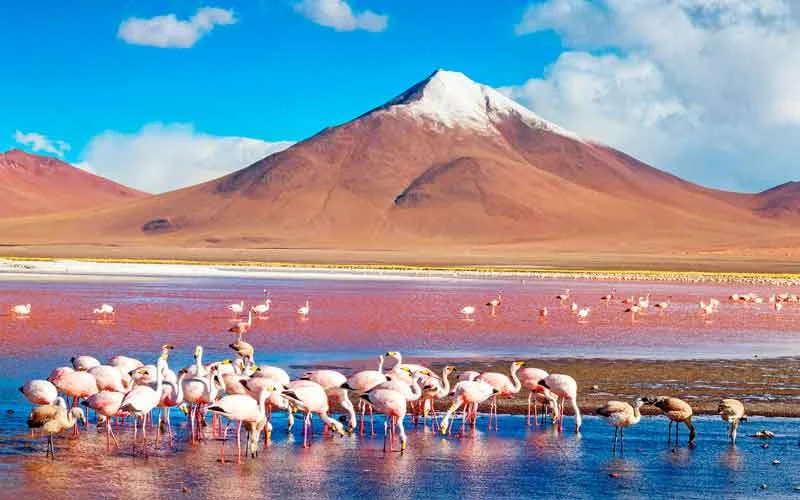
During the following days, the route continues to the Southern Altiplano, where you will visit the Cañapa, Hedionda, and Colorada lagoons, the natural habitat of thousands of pink flamingos. You’ll be amazed by the Sol de Mañana geysers, the Polques hot springs, the Dalí Desert, and the mystical Licancabur Volcano, which marks the border with Chile.
Itinerary
Itinerary
Uyuni – Train Cemetery – Colchani – Uyuni Salt Flats – Incahuasi Island – Sunset
The experience begins with a pick-up from your hotel in Uyuni. We head first to the Train Cemetery, an iconic stop where rusted locomotives that were once part of Bolivia’s mining boom rest. Here you can capture artistic photographs among these giant, abandoned steel structures.
We continue to the town of Colchani, the gateway to the salt flats. Here you can observe the traditional salt production process, visit small museums, and purchase handicrafts made with salt, llama, and alpaca textiles.
Upon entering the Uyuni Salt Flats, the landscape changes dramatically: an endless white expanse surrounds us. We visited the famous “Eyes of the Salt Flats” (underground water springs) and the salt mounds harvested by local families.
We stopped at the Playa Blanca Salt Hotel, the world’s first hotel built entirely of salt, now a museum. Then, we headed to the Forest of Flags and the Dakar Monument.
Lunch was served in the middle of the salt flats, with a 360-degree panoramic view. Afterward, we explored the famous Incahuasi Island, a volcanic rock oasis filled with giant cacti that can reach over 10 meters in height. From its summit, the view of the salt flats is breathtaking.
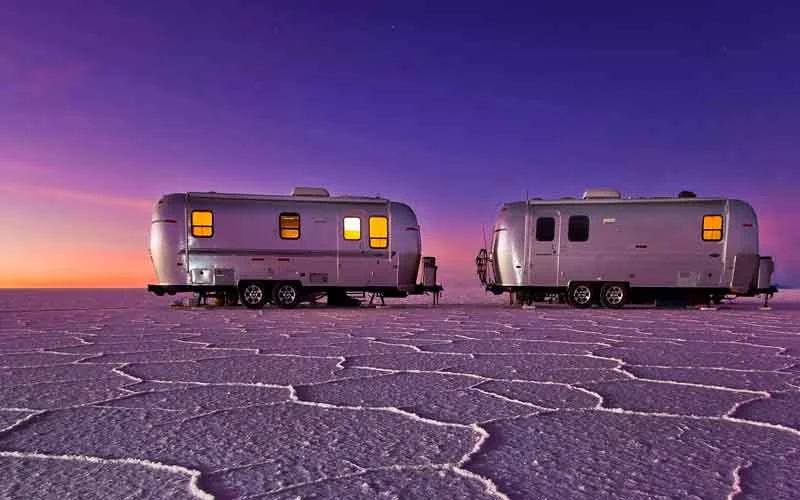
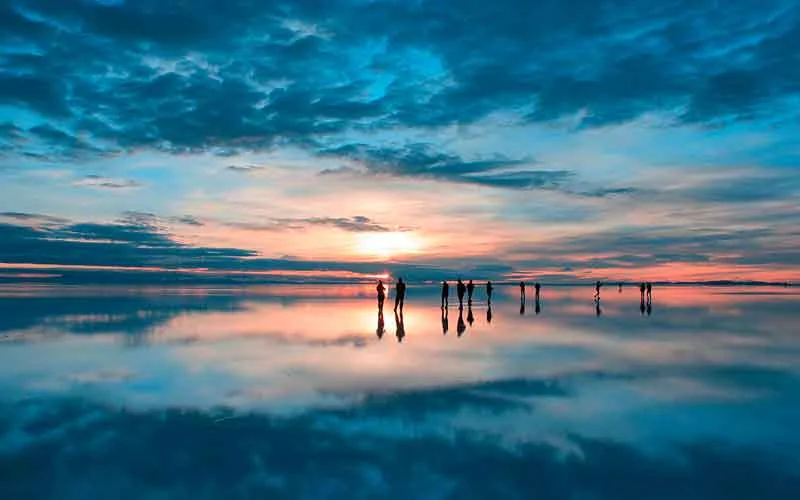
Finally, we went to the northern or southern part of the salt flats to watch the sunset reflected on the white surface (during the rainy season, a mirror effect can be observed). We spent the night in rustic accommodations in the village of San Juan or Coquesa, near the Tunupa Volcano.
Chiguana Desert – Ollagüe Volcano – High-Altitude Lagoons – Siloli Desert – Stone Tree – Laguna Colorada
After breakfast, we head to the Chiguana Desert, a semi-desert region with railway remnants, where the still-active Ollagüe Volcano dominates the horizon. From a natural viewpoint, its constant gas emissions can be observed.
We enter the Eduardo Avaroa Andean Fauna National Reserve, a protected area rich in wildlife. Visit several high-altitude lagoons: Laguna Cañapa, Laguna Hedionda, Laguna Honda, and Laguna Chiarkota, where Andean, Chilean, and James’s flamingos feed in brackish waters.
We continue through the Siloli Desert, home to the enigmatic “Stone Tree,” a geological formation eroded by the winds of the high plateau.
We ended the day at Laguna Colorada, famous for its intense reddish hue due to the pigments of algae and microorganisms. Large colonies of flamingos also inhabit this area. We spent the night in a basic shelter in the Huayllajara region.
Sol de Mañana Geysers – Polques Hot Springs – Salvador Dalí Desert – Laguna Verde
Very early, we set off for the Sol de Mañana Geysers, where steam and fumaroles emerge from pools of boiling mud. The contrast with the dawn light is simply spectacular.
Afterward, we arrived at the Polques Hot Springs, natural thermal waters ideal for a relaxing soak amidst volcanic landscapes.
We continued on to the Salvador Dalí Desert, named for its surreal landscapes that evoke the paintings of the Spanish artist. We then reached the base of the Licancabur Volcano, where Laguna Verde and Laguna Blanca are located, their colors varying depending on the angle of the sun and the minerals present.
Afterwards, we begin our return to Uyuni. Along the way, we pass through the Valley of Rocks, the town of Villa Mar, San Cristóbal (famous for its colonial church moved stone by stone), and finally arrive in Uyuni.
Includes
What does the tour include?
Pick-up from your hotel in Uyuni
We’ll pick you up directly from your accommodation in downtown Uyuni to start your adventure without any hassle.
Professional Spanish-speaking driver-guide
Accompanied by an expert guide who will share information about the history, geography, and culture of the region, guaranteeing a safe and enriching experience.
Accommodation for 2 nights:
- 1 night in a salt hostel, built with salt blocks from the Salar de Uyuni, a unique and unforgettable experience.
- 1 night in a basic lodge, located near Laguna Colorada (also known as Laguna Hedionda), surrounded by breathtaking natural landscapes.
Full board during the tour:
- 2 nutritious breakfasts, perfect for starting each day with energy.
- 3 varied lunches, featuring typical Bolivian dishes and lighter options.
- 2 hot dinners, prepared by the staff at the accommodations, perfect for recharging your energy after a day of exploring.
Assistance throughout the trip
Our team is attentive to any needs or issues that may arise during the journey.
Permits and logistical coordination
All entrance fees and permits required to visit the nature reserves are arranged in advance, so you can simply enjoy yourself.
Not Included
What’s not included?
Entrance to the Mummy Cemetery
Access to this archaeological site requires an additional fee, payable directly at the entrance (approx. 10–15 Bs).
Tips (optional)
Tips for the guide, driver, or accommodation staff are not included. A voluntary contribution is suggested as a thank you for the service.
Medical or travel insurance
No insurance is included. It is recommended to purchase international insurance that covers accidents, medical emergencies, and altitude sickness.
Bottled water and personal snacks
Full meals are provided during the tour, but it is advisable to bring extra water, energy snacks, or dried fruit for longer journeys.
Hot showers at some lodges
Some accommodations located in remote areas of the highlands have hot showers available for an additional fee (approx. 10 Bs).
Entrance fees to parks or nature reserves (if applicable)
Depending on the chosen route, entrance fees to sites such as Eduardo Avaroa National Reserve or Incahuasi Island can be paid directly on-site.
Personal expenses
Purchases of souvenirs, alcoholic beverages, or any expenses not specified in the itinerary.
Recommendations
Travel Recommendations
Bring your passport or ID: It is essential for checking into accommodations and at checkpoints along the route. If you are traveling from abroad, make sure your passport is valid.
Bring cash in Bolivianos: ATMs and internet access are not always available along the route, so it is recommended to bring enough cash for entrance fees, tips, or personal expenses.
Pack warm clothing for cold nights: Temperatures can drop below 0°C in the Altiplano region, especially during the winter months (June to August). Bring a thermal jacket, gloves, a hat, and a scarf.
Pack comfortable clothing for the day: During the day, the weather is sunny, so it is advisable to wear light clothing, sunglasses, sunscreen, and a hat or cap to protect yourself from UV radiation.
Bring a water bottle, toilet paper, and personal snacks: Although full meals are included, it is recommended to bring extra water, energy bars, or nuts for longer journeys.
Camera with spare batteries: The Salar de Uyuni offers unique landscapes and ideal conditions for spectacular photographs, especially at sunrise or during the rainy season. Don’t forget extra batteries, as some accommodations don’t have continuous electricity.
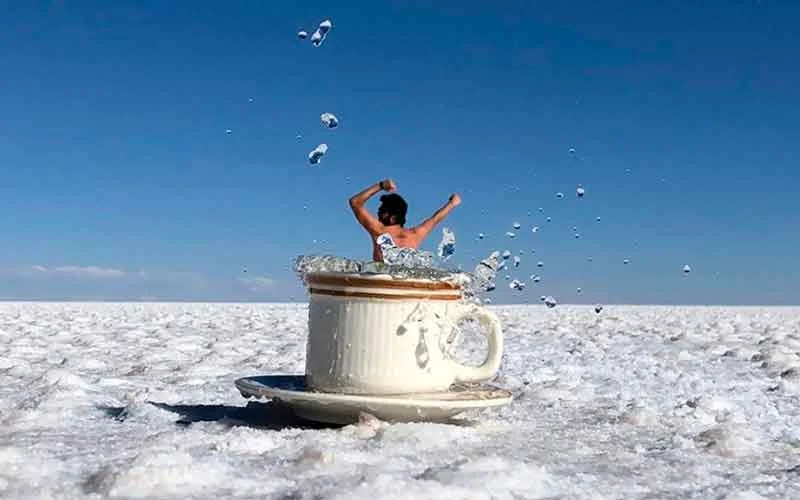
Brightly colored clothing: Ideal for taking creative photos on the salt flats, where the contrast of the white or reflected background stands out even more with red, blue, or yellow garments.
Towel and sandals: Useful if you decide to enjoy the Polques hot springs or similar locations during your trip.
Additional personal items: Pack moisturizer, lip balm, and eye drops, as the dryness of the high plateau can affect your skin and mucous membranes.
Respect the natural environment: Don’t leave trash, don’t extract salt, and don’t alter the landscapes. The Salar and its surroundings are fragile ecosystems that deserve care and respect.
FAQs
Frequently Asked Questions (FAQs)
What is the best time to visit the Salar de Uyuni?
The dry season (May to October) allows you to explore the entire salt flat and its surroundings. The rainy season (January to March) offers the famous mirror effect, although some places may be inaccessible.
What type of accommodation is offered?
The accommodations are rustic and basic, with shared or private rooms depending on availability. The first night is usually spent in a salt hostel and the second in an Andean refuge.
Are bathrooms and showers available?
The accommodations have bathrooms, but hot water is not always available. Showers in some refuges have an additional cost.
Is this tour suitable for children?
Yes, but it is not recommended for children under 5 years old due to the altitude and weather conditions.
What is the maximum altitude reached during the tour?
The highest point is around 5,000 meters above sea level in the area of the geysers and the Licancabur volcano.